
April 2024
Meal Maiker

01 Background Information
About Anji Mountain
Anji Mountain is a sustainable company with their mission being to provide "home furnishings made from sustainable and renewable materials with a focus on natural fibers and recycled materials" and my team wanted to keep this in mind as our idea may potentially become a product for the company.
Given Prompt
Design a product that seamlessly integrates sustainable practices into daily kitchen activities. How can technology and service design create more intuitive and engaging experience for managing waste, conserving resources, and preparing food sustainably?
Design Process
02 Research and Problem Space Formation
Desk Research
To determine our focus area, we conducted market research to understand the pain points potential users have in the kitchen. Our research highlighted three key markets:
Composting
Water Waste
Tupperware
In addition, we evaluated Anji Mountain’s existing resources and product offerings, noting that all of their products are made from recycled materials.
Taking into account both the company's resources and our market research, we decided to concentrate our efforts on the tupperware industry.
Problem Statement
Meal prepping can be daunting, as many people struggle with scheduling ingredient purchases and cooking sessions, dislike cleaning containers, and often experience food waste due to improper planning and storage.
Solution Statement
MealMaiker has sustainable storage containers that are detatchable, easily cleanable, and can be paired with our app to make meal prepping effortless for our customers.
Market Research
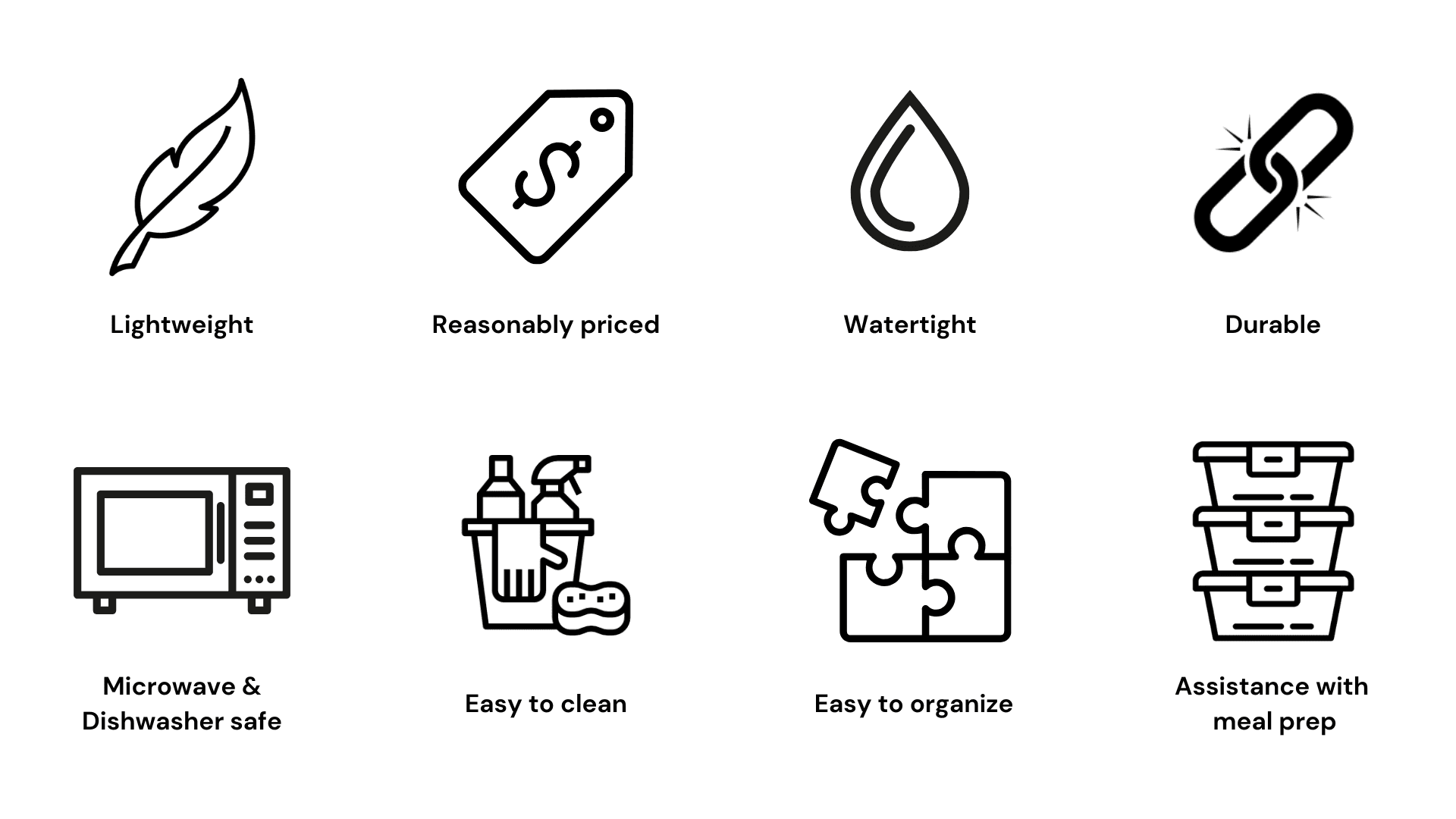
After conducting further research into the tupperware industry, we identified a significant gap between the containers currently available on the market and the features users desire.
User Desires for Containers and Meal Prep:
03 Ideation
Sketching
Using these insights, each team member sketched concepts addressing the identified pain points. One of my suggestions was to design containers with rounded corners for easier cleaning and create modular, connectable boxes. This would enable users to customize meals while minimizing the number of dishes to clean.
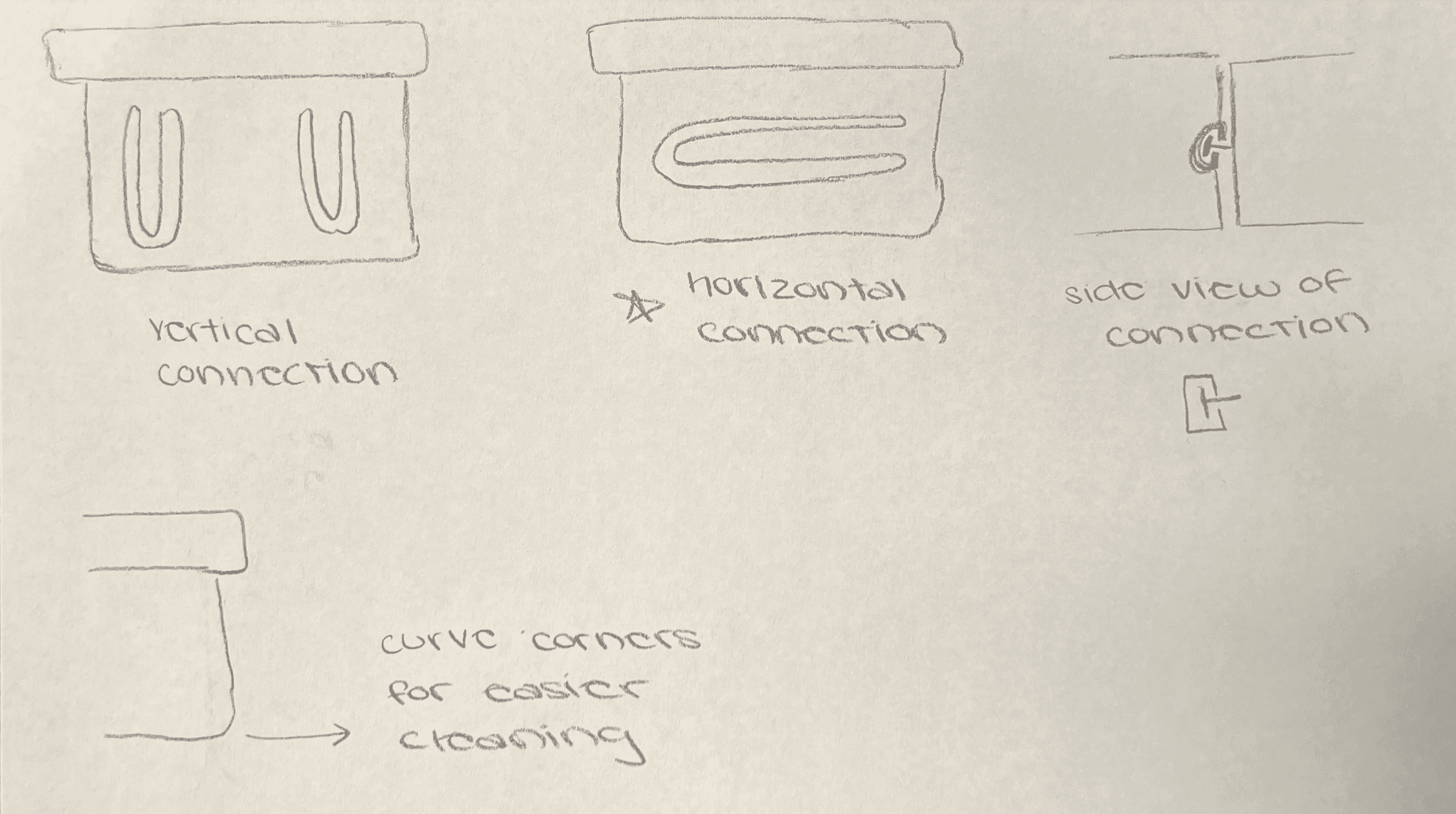
my sketches for connectable containers
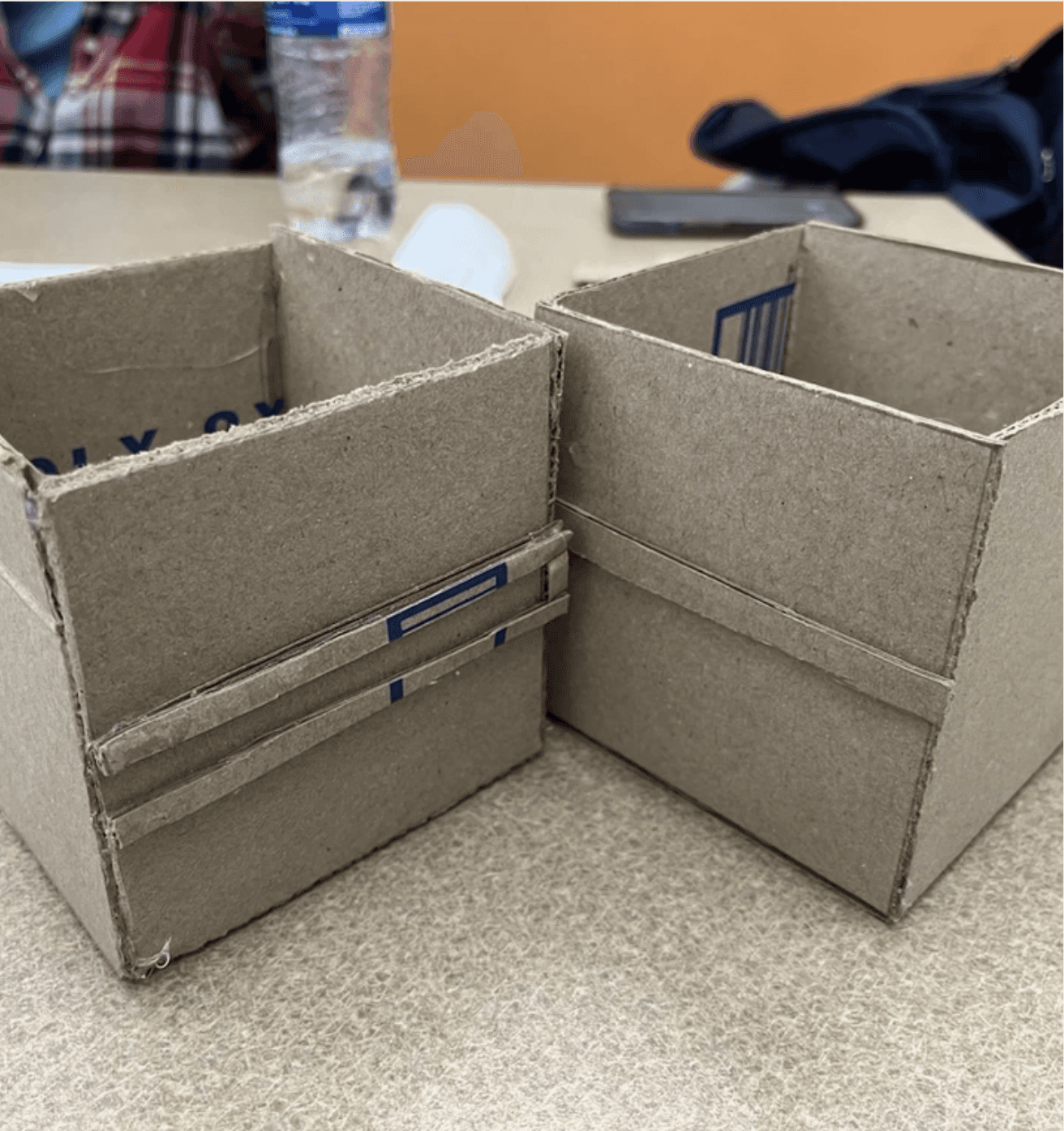
physical prototype with the tracks
After individual brainstorming, we collaborated to merge our ideas into a cohesive solution.
04 Evaluation
Competitive Analysis
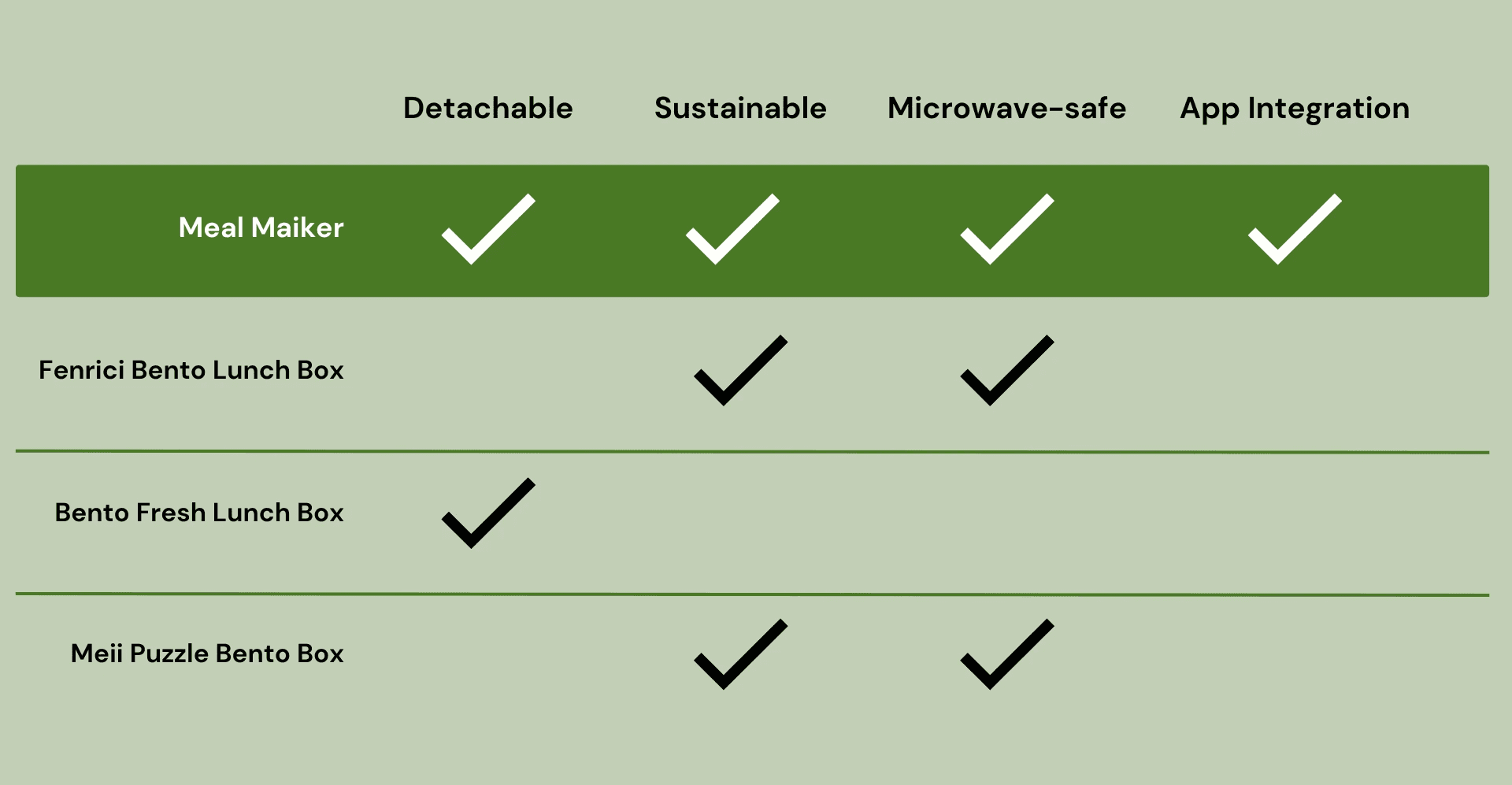
We also conducted a comparative analysis to evaluate our concept against existing products on the market.
05 Final Solution
Our final solution included a various sized containers and app integration to assist users in meal prepping
3D Model
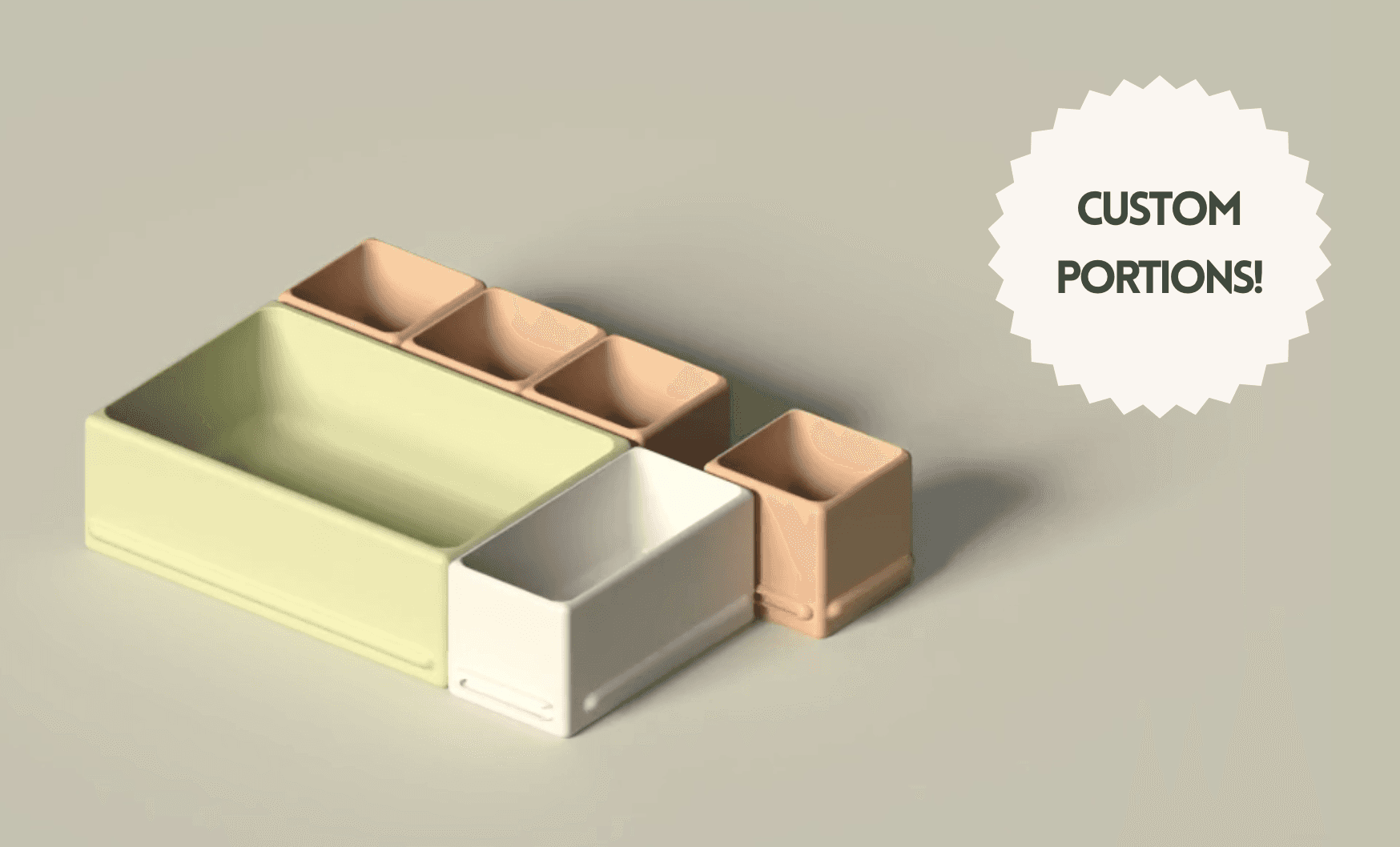
Customized Portions
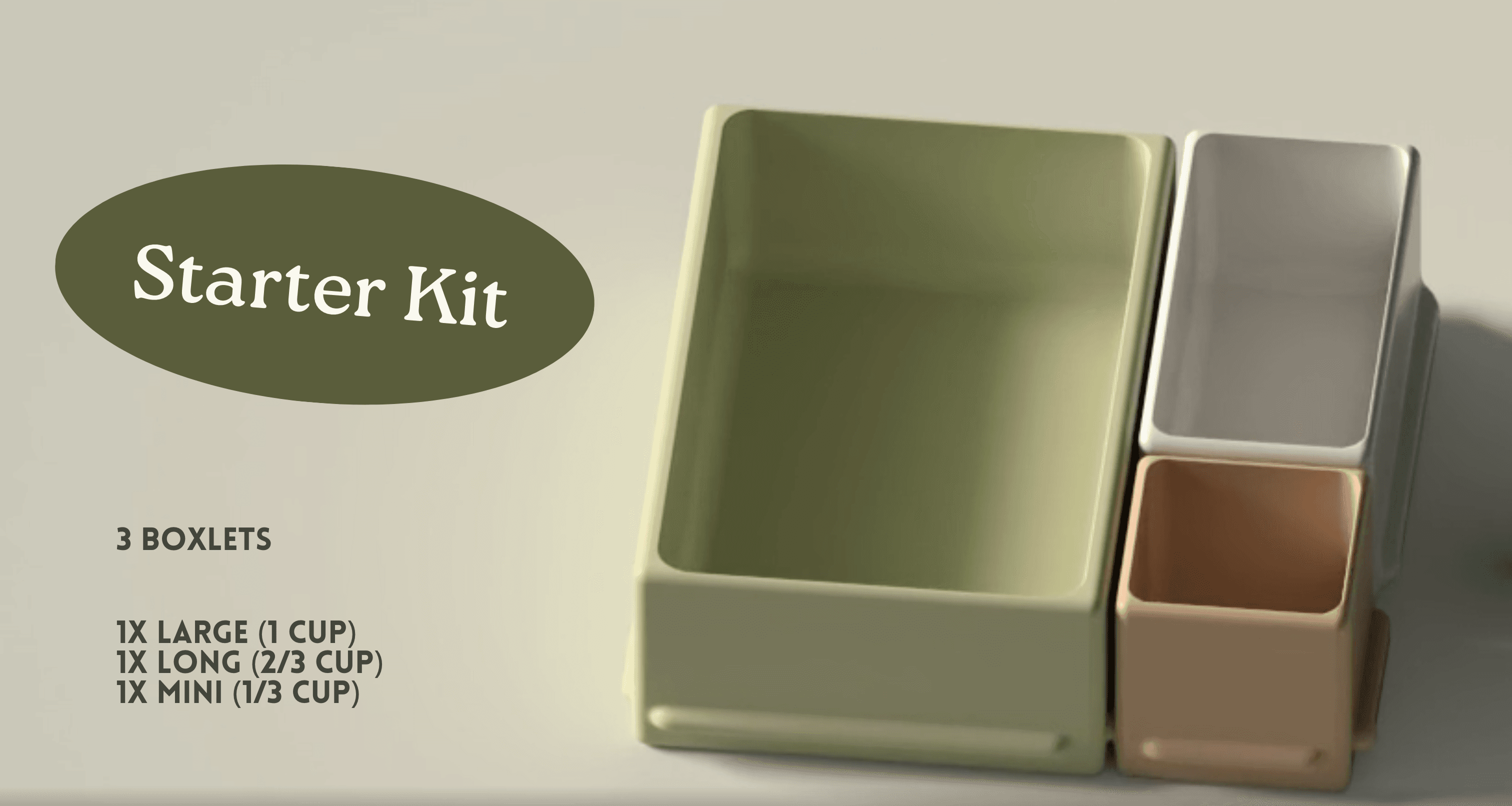
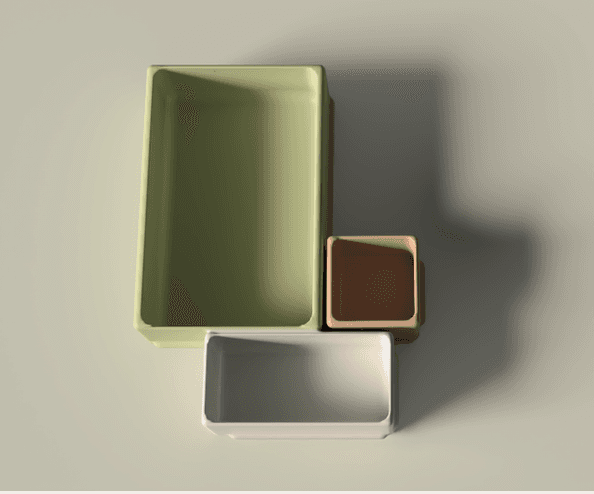
The initial starter kit included 1 cup, 2/3 cup and 1/3 cup sizings. Consumers would also be able to buy boxes individually to serve their needs.
Various Sized Containers
The different sized containers allows you to choose what containers you want to use for each meal. Various sizes allow for the consumer to minimize food waste.
Connectable Boxes
Allowing boxes to connect and detach allows for easy storage in fridges and back packs, as well as easy cleaning.
Rounded Corners
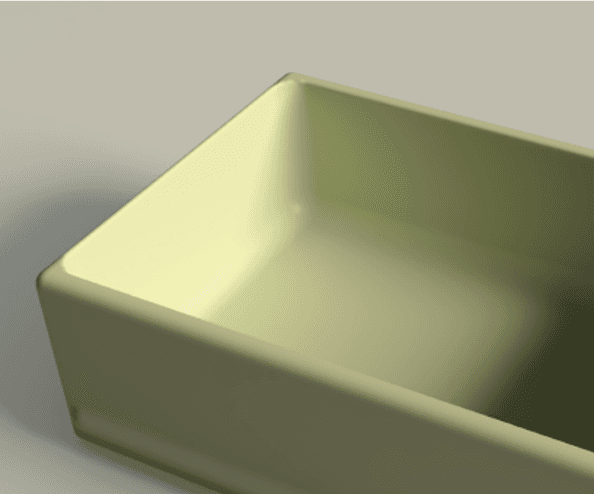
Rounded corners allows for easy cleaning and less water waste while trying to clean any crevices.
Materials
Wheat Straw
Light weight
Microwaveable Safe
Dishwasher Safe
Frozen Safe
Anti-bacterial
Anti-odor
Carbon - neutral output
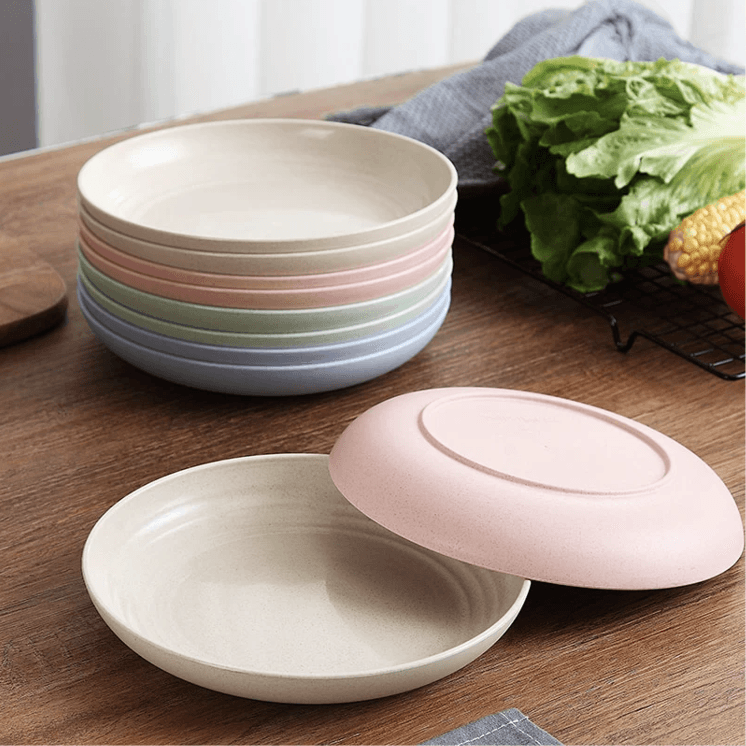
In addition to all the features listed above, wheat straw can also decompose in 6-9 months or maximum 2 year, and last for 5-10 years of daily use.
Silicone (Lid and Tracks)
Water Resistant
Easy to Clean
App Integration
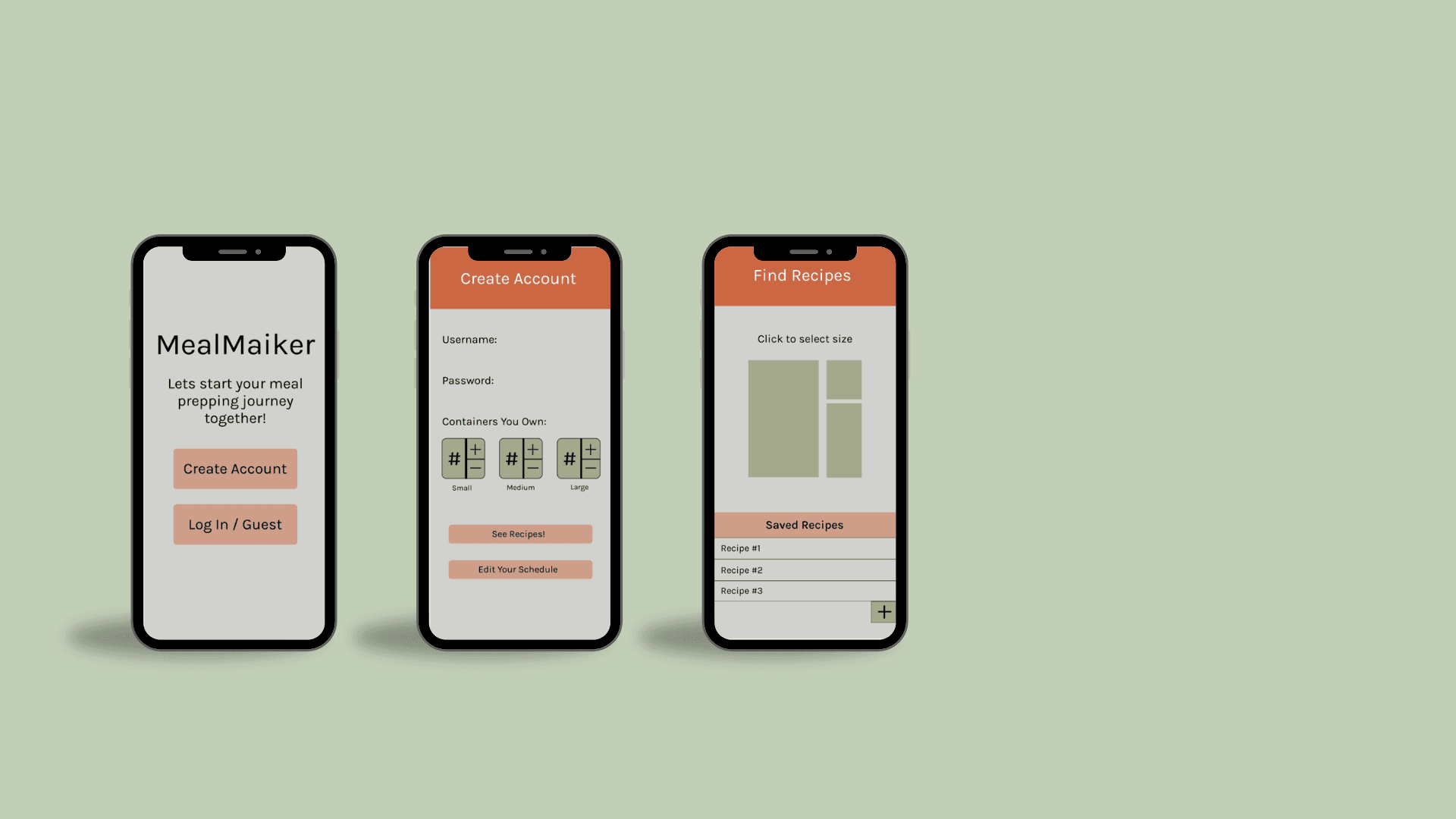
With our app, users can personalize and plan their meals. During account setup, users input the amount of each container size they own. Based on this information, the app generates tailored recipes that users can save or add to their meal prep calendar. Recipes range from snacks designed for smaller containers to full entrees for the largest ones, ensuring a seamless and organized meal-prepping experience.
06 Reflection
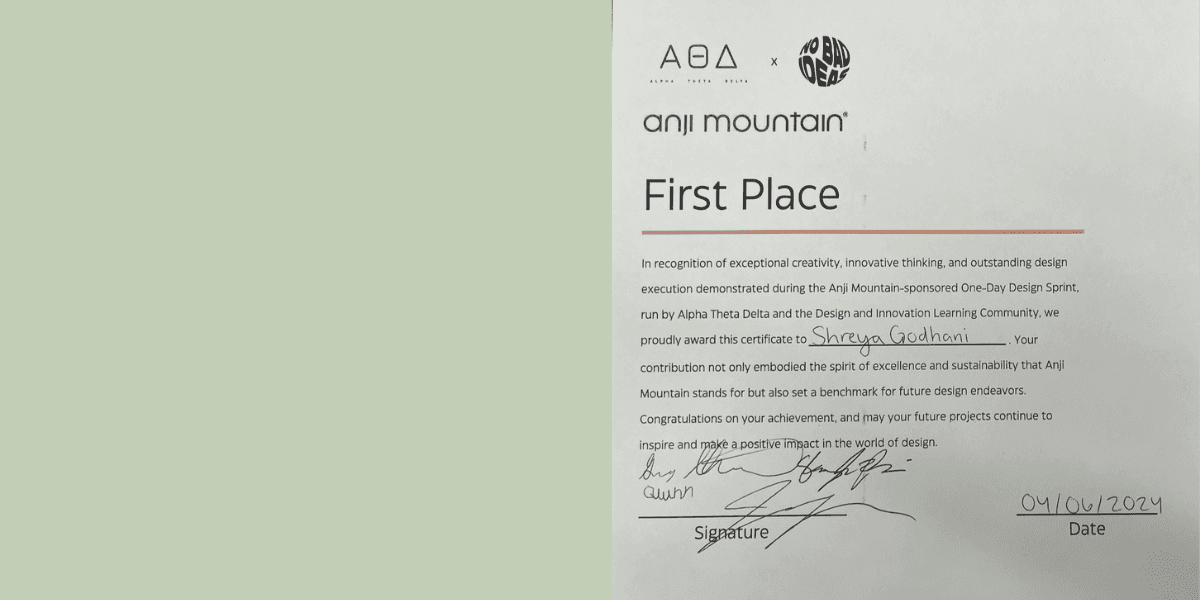
This was my first design-a-thon, and I had an incredible time competing! Going into the competition as a freshman among upperclassmen and graduates, I was initially nervous. However, our team quickly excelled at dividing tasks effectively.
After collaborating to research and ideate on our solution, we split up to focus on specific tasks. I took charge of creating a physical prototype and identifying sustainable materials for manufacturing the containers, while my teammates worked on the CAD prototype and app integration.
Overall, I learned the importance of teamwork, adaptability, and leveraging individual strengths to deliver a cohesive solution.